Service · Protection

Sealcoating that protects
your asphalt.

Sun, water, gas and oil all wear asphalt down. Sealcoating protects the surface, slows that damage and costs far less than replacing pavement too soon.

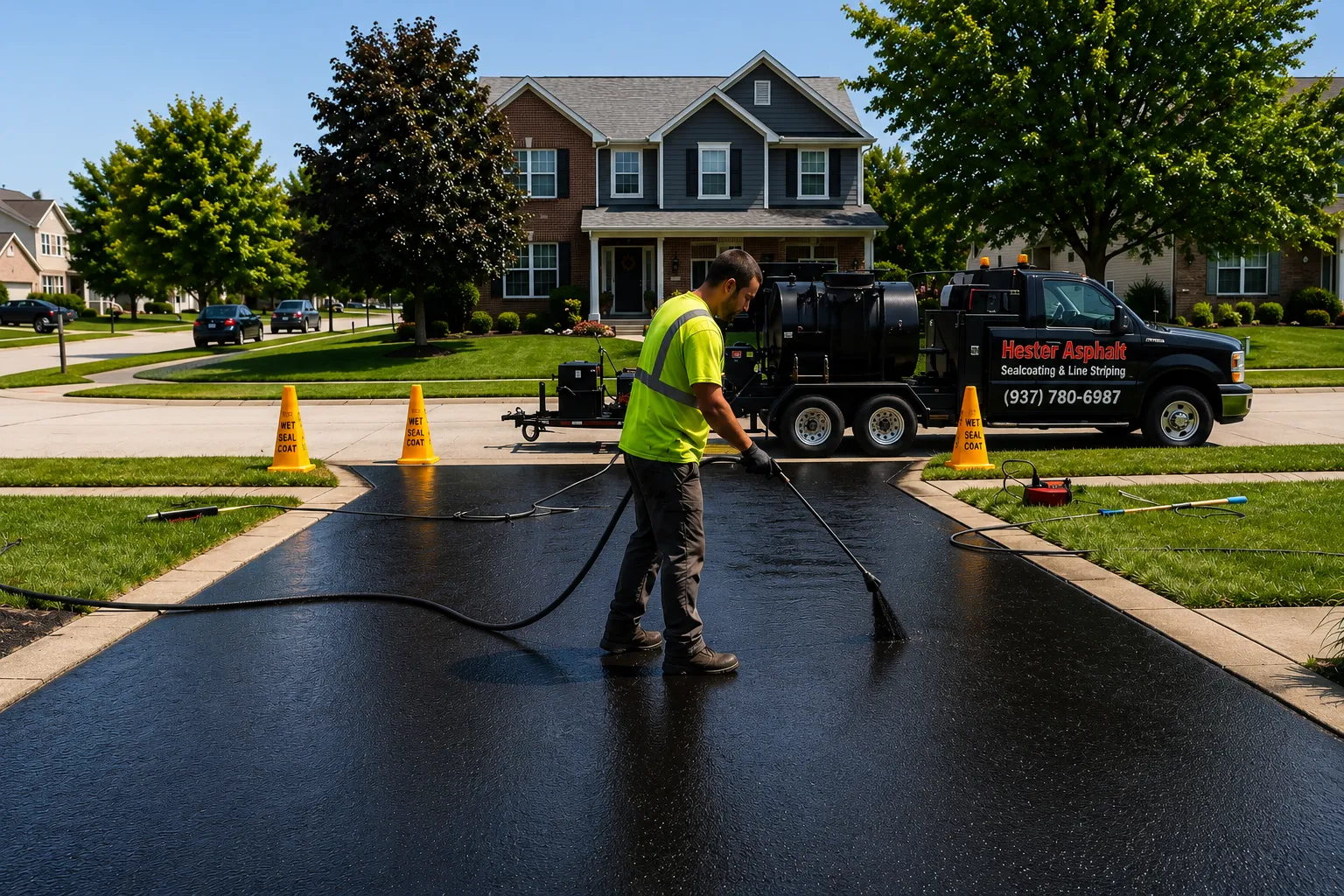
Sealcoating illustration

Asphalt is held together by a petroleum binder that starts aging from the day it is installed. UV rays break it down, water works into open areas and vehicle fluids soften it. Sealcoating adds a deep black protective layer that takes the wear instead of the pavement below.

We apply commercial grade sealer by squeegee and spray after thorough preparation. The surface is cleaned, edges are trimmed, oil spots are primed and cracks are filled first. Poor preparation causes the flaking and early fading seen on rushed jobs. We do not skip it.

Timing matters as much as material. New asphalt should cure for 6–12 months before its first coat. After that, most surfaces need sealcoating every 3–5 years depending on traffic and exposure. We explain what your pavement needs and when the next coat should be considered.

Scope

What's included.

  • Surface cleaning, edging and debris removal
  • Oil and fuel spot priming
  • Hot rubberized crack filling before coating
  • Commercial grade sealer, squeegee/spray applied
  • Two coats on areas with heavy traffic and wear
  • Barricading and cure time coordination

Commercial

Regular sealing, restriping and inspection keep your lot black, clearly marked and ready for customers without creating extra work for your staff.

Residential

Sealcoating is one of the most affordable ways to protect a driveway, restore its appearance and help it last for years longer.

Straight Answers

Sealcoating FAQ

How soon can I sealcoat new asphalt?

Wait 6–12 months so the surface oils cure out. Sealing too early traps them and softens the coat — patience here pays off for years.

How long before I can drive on it?

Foot traffic in 4–8 hours, vehicles in 24–48 depending on humidity and temperature. We schedule so the cure window lands easy on your routine.

Does sealcoating fix cracks?

No — that's why crack filling comes first, as part of our prep. Sealer protects the surface; rubberized filler handles the joints and cracks.

Why did my last sealcoat job fade in a year?

Usually thin material, no second coat in wear areas, or zero prep. Done right, expect a deep black surface that holds 3–5 years.

Free Estimates

Ready for sealcoating done right?

Request your free estimate — careful site visit, clear written price and honest answers.

Call Request Estimate